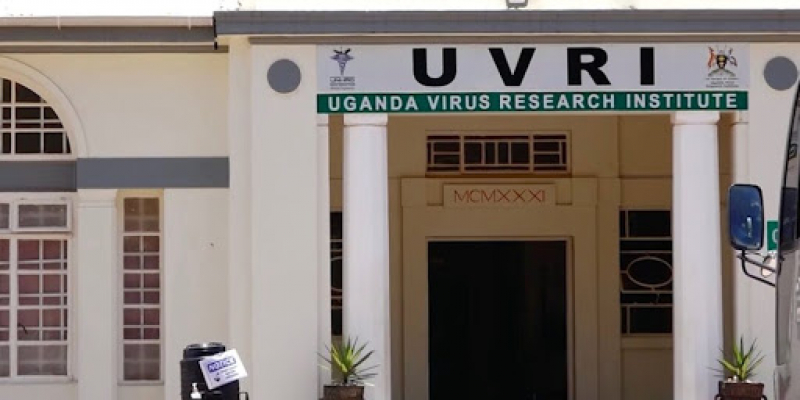
The Uganda Virus Research Institute (UVRI) has been tasked with leading global efforts to eliminate polio through a new reference laboratory set to open at its Entebbe-based facility.
Prof Pontiano Kaleebu, the institute’s Executive Director, revealed this during the launch of activities marking UVRI’s 90th anniversary today.
He said scientists at the institute have already embarked on studies aimed at better understanding vaccine-derived polio, a strain linked to the weakened live virus used in the Oral Polio Vaccine (OPV).
Kaleebu said the new laboratory, once officially commissioned, will support research and innovation aimed at controlling vaccine-derived poliovirus and ultimately contribute to the global eradication of polio.
Efforts to eradicate polio have been ongoing for decades. In 1988, the World Health Organization launched the Global Polio Eradication Initiative (GPEI), a public-private partnership dedicated to wiping out the disease worldwide. According to WHO, global polio incidence has since declined by 99 percent.
Today, more than 80 percent of the world’s population lives in regions certified free of wild poliovirus.
However, wild polio remains endemic in Afghanistan and Pakistan, while several countries continue to battle outbreaks of vaccine-derived poliovirus.
Uganda has not recorded an indigenous wild poliovirus case since 1996, although imported and vaccine-derived cases have occasionally emerged.
In 2021, UVRI confirmed an outbreak of circulating vaccine-derived poliovirus type 2 in Kampala.
Another outbreak was detected in May 2024 at an environmental surveillance site in Mbale.
Kaleebu said the new laboratory will strengthen efforts to protect Uganda and contribute to ending polio globally.
By Our Reporter
26th May 2026
END