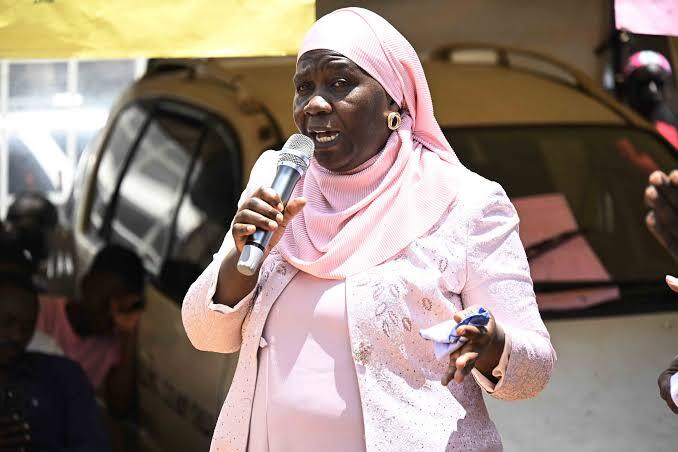
Kampala Central Member of Parliament Minsa Kabanda has attributed the discrepancy between the names appearing on her National Identification Card and Electoral Commission documents to delays by the National Identification and Registration Authority (NIRA) in processing her application to change her names.
Speaking to journalists during a break in court proceedings, Kabanda explained that she had applied to have her name changed from Minsa Kabanda Nabbengo to Minsa Kabanda, but the registration authority had not completed the process.
She said the delay in updating her official identification details was responsible for the difference in names now at the centre of a legal challenge to her election as Kampala Central MP.
Her explanation follows testimony by election petitioner and National Unity Platform (NUP) Secretary General David Lewis Rubongoya before the Civil Division of the High Court in Kampala, where he is challenging her victory in the January 15, 2026 parliamentary elections.
Rubongoya told court that Kabanda was improperly nominated because the names appearing on her Electoral Commission nomination and declaration documents differ from those on her National Identification Card.
He noted that while the Electoral Commission documents identify her as Minsa Kabanda, her National ID bears the names Minsa Kabanda Nabbengo.
The petitioner argues that the discrepancy raises questions about the validity of her nomination and subsequent declaration as the duly elected Member of Parliament for Kampala Central.
Rubongoya is consequently seeking to challenge both her nomination and the Electoral Commission’s declaration of her as the winner of the parliamentary contest.
The petition forms part of a wider legal challenge to Kabanda’s election, with Rubongoya questioning several aspects of the nomination process and the conduct of the January polls.
In an earlier ruling delivered on October 7, 2026, Justice Flavia Nabakooza declined to strike out complaints concerning Kabanda’s nomination, academic qualifications and differences in her names, allowing those issues to remain part of the substantive election petition.
The court observed that the certified documents relied upon by Rubongoya were only obtained after the election, making it impractical for him to have raised the complaints before polling.
However, the judge struck out 97 additional affidavits filed by Rubongoya without the required permission of court.
The preliminary ruling did not determine the merits of the allegations concerning Kabanda’s nomination or the validity of her election.
The substantive election petition is expected to proceed through the court process, where the parties will have an opportunity to present their respective arguments.
By Edith Namwanje
2nd Nov 2026
End