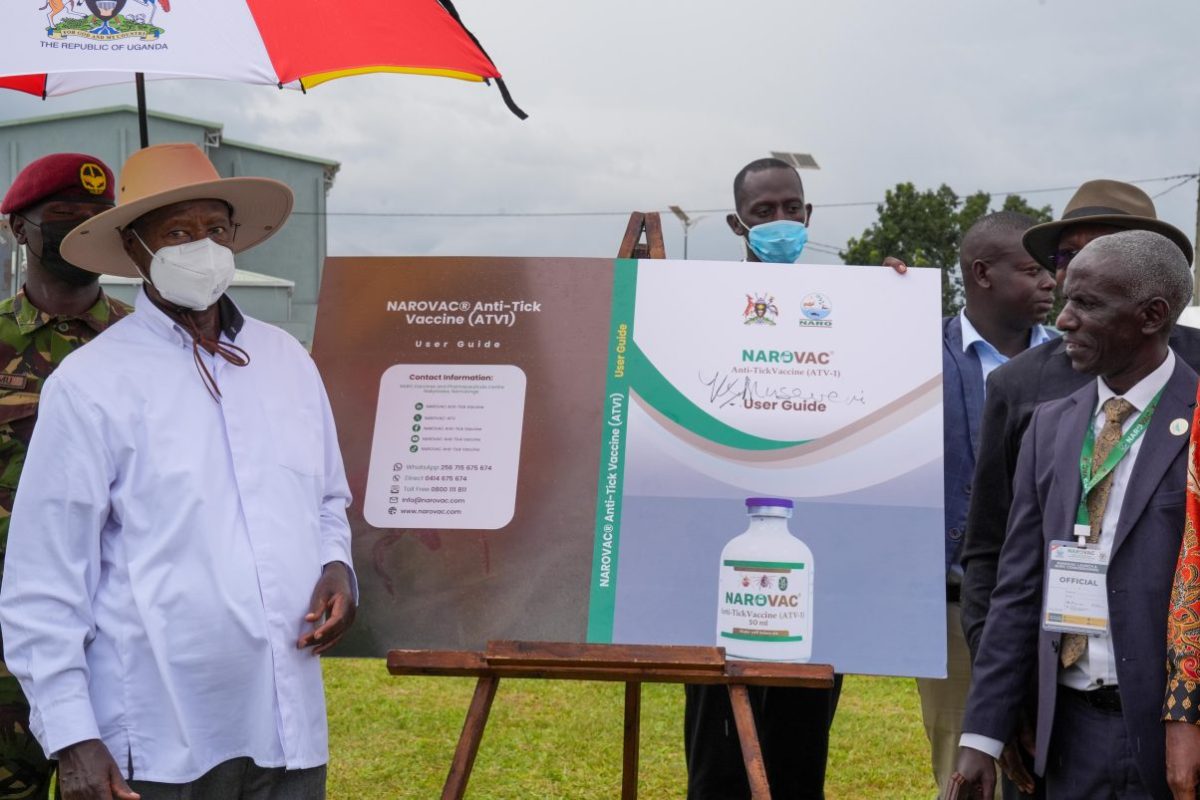
President Yoweri Museveni has proposed removing taxes on scientists’ salaries as part of efforts to strengthen Uganda’s scientific community and accelerate national transformation through science, technology, and innovation.
Speaking at the launch of a locally developed anti-tick vaccine in Namulonge, the President said the proposed tax exemption would place scientists on similar footing with other exempted groups such as soldiers, arguing that it would improve motivation, retention of skilled professionals, and overall research productivity.
Museveni commended Ugandan researchers for developing the anti-tick vaccine, describing it as a major breakthrough for the livestock sector and evidence that increased investment in scientific research is beginning to yield tangible results.
He emphasized that such innovations reduce Uganda’s dependence on imported solutions and strengthen local capacity.
He further called on Parliament to support the proposal once it is formally presented, noting that incentivizing scientists is key to driving economic transformation.
The vaccine, developed by the National Agricultural Research Organisation (NARO), targets East Coast Fever and is expected to significantly reduce losses in the livestock sector, which are estimated at up to 3.8 trillion shillings annually due to tick-borne diseases.
Minister of Agriculture, Animal Industry and Fisheries Frank Tumwebaze also praised the innovation, saying it demonstrates the capacity of Uganda’s agricultural research institutions to produce competitive, market-ready solutions.
He added that the production facility’s capacity of 36 million doses annually will help meet national demand for livestock vaccines while reducing reliance on imports.
END