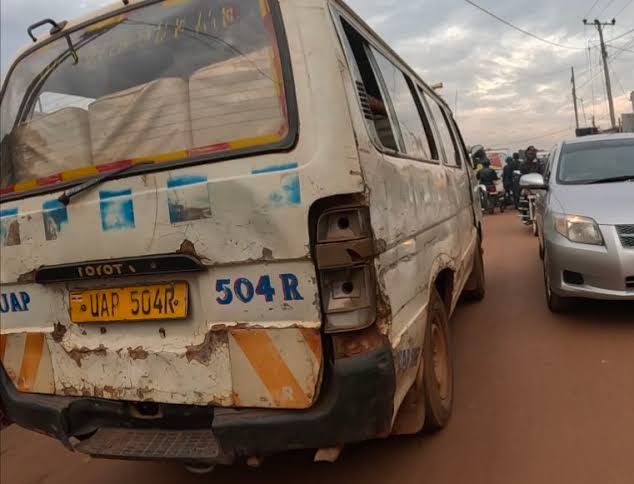
Transport has been disrupted across much of the Kampala Metropolitan Area following the government’s enforcement of a ban on vehicles deemed to be in Dangerous Mechanical Condition (DMC).
The operation, which began today, August 24, 2026, targets public service vehicles, particularly commuter taxis commonly known as Ganyegenya, as part of a 100-day government campaign to remove unroadworthy vehicles from the roads and improve passenger safety.
The crackdown, led by the Ministry of Works and Transport, has significantly reduced the number of taxis operating on several routes, leaving travelers and workers struggling to reach their destinations.
Taxi drivers’ associations in the Greater Kampala Metropolitan Area have appealed to the government for more time to comply with the directive.
They argue that many operators cannot afford to carry out all the required mechanical repairs at once and are calling for the enforcement to be implemented gradually.
Muhammad Ssempijja, a driver and leader at Namyiba Taxi Park, welcomed the government’s decision to address the condition of vehicles but called for leniency.
He said most drivers lack the financial capacity to repair their vehicles immediately and urged the government to consider a phased approach to the operation.
Ssempijja also warned that the crackdown is already affecting passengers, with fewer taxis on the roads leading to transport shortages and increased fares on some routes.
Some fares have reportedly doubled or more. The Bwaise route has risen from Shs2,000 to Shs4,000, while fares to Masanafu have increased from Shs1,500 to Shs3,000.
On the Nateete route, passengers are reportedly paying as much as Shs5,000, up from Shs2,000.
As the operation continues, passengers face longer waiting times and higher transport costs, while taxi operators are under pressure to bring their vehicles up to the required safety standards.
By Charles Katabalwa