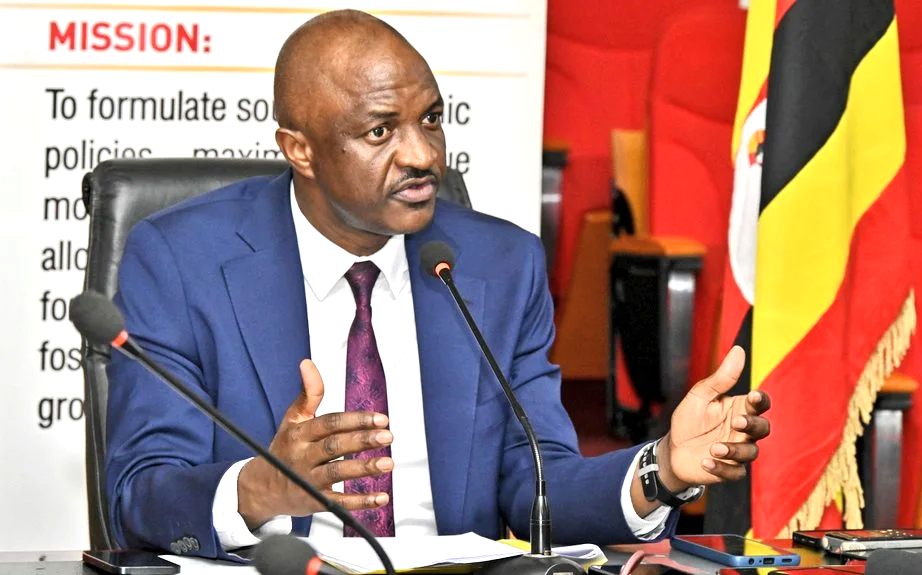
The Ministry of Finance, Planning and Economic Development has released Shs23 trillion to fund government operations and programmes during the first quarter of the 2026/2027 Financial Year covering July, August and September.
The release, announced in Kampala by the Permanent Secretary and Secretary to the Treasury, Ramathan Ggoobi, represents 27 percent of the approved national budget for the financial year.
Ggoobi said the funds have been released in line with government implementation schedules, projected domestic revenue collections and expected external financing.
He explained that a significant portion of the funds will go towards government’s financial obligations, with Shs10 trillion allocated for debt and treasury operations, Shs2 trillion for wages and salaries, and Shs566 billion for pension and gratuity payments.
Other key allocations include Shs355 billion for Parliament, Shs51 billion for the Judiciary and Shs15 billion for the Office of the Auditor General.
Under the government’s Agro-Industrialisation, Tourism, Minerals and Science, Technology and Innovation (ATMS) agenda aimed at driving tenfold economic growth, Ggoobi said Shs289 billion has been released for agro-industrialisation, Shs65 billion for tourism development, Shs50 billion for mineral-based industrial development and Shs377 billion for science, technology and innovation.
Additional funding has also been provided for security, infrastructure development, human capital development, local government programmes and domestic revenue mobilisation.
Ggoobi said Uganda’s economy continues to demonstrate resilience, with economic growth accelerating, inflation remaining relatively contained and the Uganda shilling maintaining stability.
He noted that export earnings have reached record levels, while investor confidence continues to improve.
According to the Treasury chief, the Uganda shilling appreciated by 1.9 percent against the United States dollar between May and June 2026, supported by increased export receipts, higher remittance inflows and sound macroeconomic management.
However, Ggoobi cautioned that inflationary pressures remain a concern, with headline inflation increasing from 3.2 percent in May 2026 to 3.7 percent in June 2026.
He attributed the rise largely to increased transport and energy costs linked to higher international oil prices and geopolitical tensions in the Middle East.
The Ministry of Finance said it will continue monitoring economic developments and implementing measures aimed at maintaining stability while supporting government priorities under the 2026/2027 national budget.
By Olivia Nabaggala
10th July 2026
End