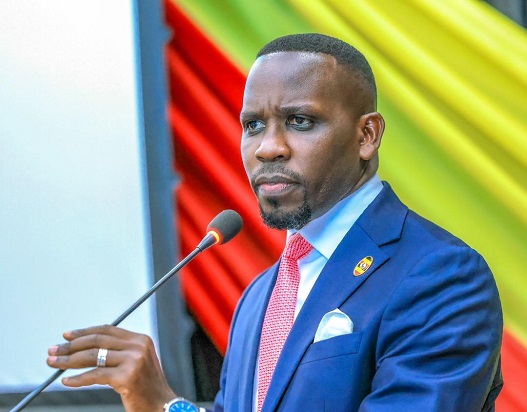
The Opposition in Parliament has warned that Uganda’s proposed 2026/27 budget risks undermining livelihoods due to rising debt, shifting fiscal targets, and controversial tax measures.
Presenting the alternative budget in Parliament, Leader of the Opposition Joel Ssenyonyi said the country’s fiscal path is unsustainable; with much of the over 78 trillion shilling budget already committed to debt and fixed costs.
He notes that this leaves limited funding for key sectors such as healthcare staffing, education (rehabilitation of schools), and agriculture among others social infrastructure.
They warned of over concentration on large infrastructure (SGR, Expressways), Industrial Parks, and AFCON 2027, that while they sound good the return of investment to the benefit of Ugandans is still limited.
The Opposition estimates that only about 34.2 trillion shillings—roughly 44 percent of the budget—remains for discretionary spending, a constraint already reflected in underfunded services, stalled projects, and growing inequality.
They also cited projects like Atiak Sugar Factory, Dei BioPharma, Lubowa International Specialised Hospital, and the Inspire Africa coffee initiative as costly investments with limited returns.
Ssenyonyi argued that such spending points to deeper flaws in public finance management and called for a shift toward prioritizing service delivery.
The alternative government unveiled a 71.4 trillion shilling Budget for the 2026/27 financial year, lower than the government’s proposed 84.2 trillion, anchored on the theme “Safeguarding lives, livelihoods and institutions.”
While the government projects tax revenues of approximately UGX 40 trillion to fund its UGX 84.29 trillion budget, the opposition contends the figures are bloated by corruption.
The Opposition proposes filling 295,000 vacant positions in local government to improve service delivery in the country, as opposed to the government’s salary enhancement plan for specific groups like primary/arts teachers.
Ssenyonyi called for increased funding in key sectors including agriculture, education, health, and infrastructure, while rejecting the government’s plan as bloated and debt-driven.
The LOP also challenged the government on “broken promise” regarding domestic arrears, while it had previously pledged to eliminate arrears, the proposed budget slashes the allocation for clearing these debts from UGX 1.4 trillion to UGX 200 billion. The move leaves local suppliers and contractors at crossroads in as far as their investment are concerned which cripples the economy.
In agriculture, the opposition proposes a phased increase to 5% of the total budget (approximately UGX. 3.6 trillion), different from the government’s industrialization plan through the ATMS framework.
By Francis Lubega
08th April 2026
End