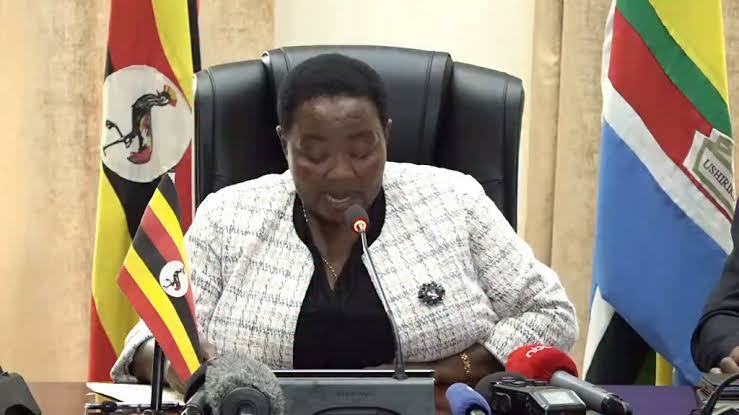
Prime Minister Robinah Nabbanja has appointed a government committee to review and harmonise complaints raised by Kampala City traders over what they describe as excessive taxes imposed by the Uganda Revenue Authority (URA).
Nabbanja has directed the Ministries of Finance and Trade, Industry and Cooperatives to review the tax policy on imported textiles and garments, warning that high taxes are driving some Ugandan traders to divert their merchandise through Kenya and Tanzania to evade the charges, resulting in revenue losses for the country.
The Prime Minister made the remarks during a meeting with leaders of Kampala City traders and landlords aimed at resolving the ongoing standoff over taxation and customs procedures.
During the meeting, traders accused URA of impounding their textile garments, particularly imports from China, and imposing high taxes that have made it difficult for them to operate profitably.
URA Commissioner General John Musinguzi acknowledged that the current tax regime has contributed to some Ugandan traders diverting their goods through Kenya and Tanzania before bringing them back into the country, a practice that results in lower tax collections.
Ministers who attended the meeting also recommended a review of the tax policy governing textile imports to address the concerns raised by traders and improve compliance.
Nabbanja further assured the traders that the government would soon compensate those whose merchandise was destroyed by floods in Kampala.
The committee appointed by the Prime Minister comprises State Minister for Finance Amos Lugoloobi, Trade Minister Sanjay Tanna, Deputy Attorney General Jackson Kafuuzi, Minister for Kampala Minsa Kabanda, as well as representatives of traders and landlords.
The committee is expected to harmonise the concerns raised and propose possible solutions to the tax dispute.
The meeting is expected to resume at 4pm today after the Prime Minister meets President Yoweri Kaguta Museveni to brief him on the traders’ grievances and obtain his guidance on the proposed interventions.
End