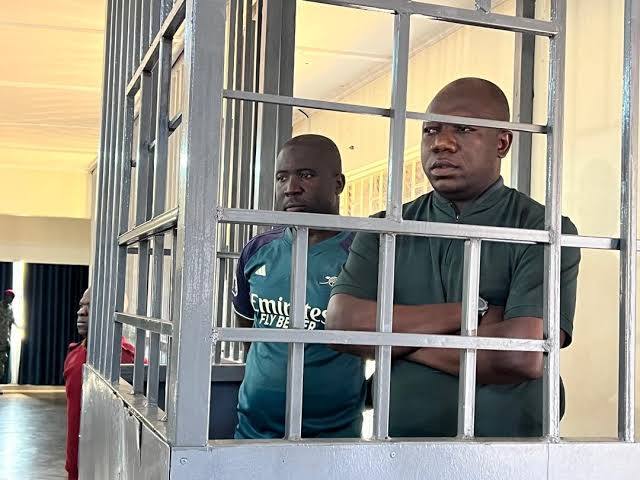
The General Court Martial sitting in Makindye has sentenced two military informers, Hamza Lyavaala and Adil Walusansa, to death for their role in the murder of victims in the 2025 Munyonyo bomb attacks.
The two were sentenced after pleading guilty to two counts of murder, having initially denied the charges when they were arraigned alongside Lt. Col. Ephraim Byaruhanga on July 6, 2026.
On September 18, 2026, their defence lawyers, Frank Kanduho and Major Busagwa, informed court that their clients wished to change their pleas. After explaining the implications of admitting the charges, court established that both accused had voluntarily decided to plead guilty.
Prosecution told court that approximately three weeks before the 2025 Uganda Martyrs Day celebrations, Lt. Col. Byaruhanga, Major Otto and Major Rugumayo allegedly held a meeting at Goers Gardens in Namulanda. During the meeting, Byaruhanga reportedly gave Lyavaala money to secure a woman to carry out the mission in Munyonyo.
Court heard that a woman identified as Sumaiya was transported from the Busoga region, accommodated in a rented house and handed explosives to deliver to Munyonyo. The explosives were subsequently detonated on her body.
Prosecution further presented evidence concerning another woman, Azatu, who was allegedly given fake explosives before being killed by operatives of the Joint Anti-Terrorism Taskforce (JATT) in Kalerwe.
The prosecution described the murders as premeditated and meticulously planned, arguing that the attacks resulted in extreme suffering and widespread public panic.
In mitigation, the defence urged court to impose a lenient sentence, citing the accused persons’ guilty pleas and arguing that their admissions had saved judicial time and public resources.
The lawyers also appealed to court to consider their clients’ family responsibilities. They told court that Lyavaala has six children and four wives, while Walusansa has seven children and three wives.
However, the prosecution maintained that the offences were exceptionally grave and warranted the death penalty.
In its sentencing decision, court acknowledged the voluntary guilty pleas, the convicts’ previous involvement in counter-terrorism activities and the judicial time and resources saved through their admissions.
Nevertheless, court emphasized that sentencing must go beyond rehabilitation to serve the broader ends of justice and protect society.
It further observed that the conduct of the two convicts demonstrated that they remained a permanent threat to society, before sentencing both Lyavaala and Walusansa to death.
The two were subsequently informed of their right to appeal against the sentence.
By Edith Namwanje
4th Nov 2026
End