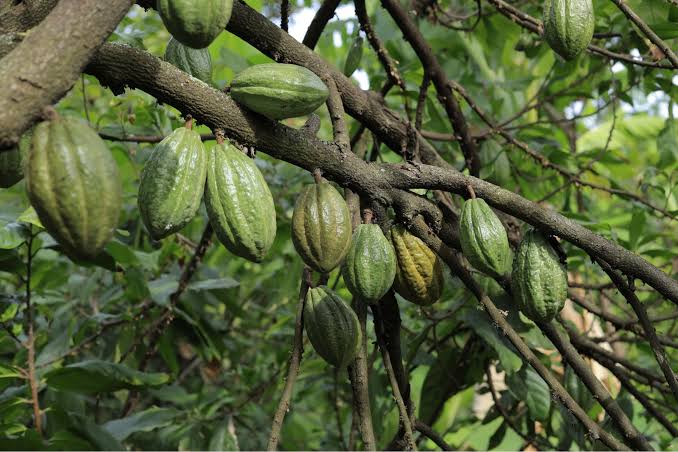
Uganda is targeting annual cocoa production of 500,000 metric tonnes by 2036, nearly seven times the current output of about 72,000 metric tonnes, under a new 10-year strategy aimed at transforming the country’s cocoa sector.
The ambitious target is one of three key objectives outlined in the Uganda Climate Resilient Cocoa Development Strategy (2026–2036), launched by the Ministry of Agriculture, Animal Industry and Fisheries (MAAIF).
The strategy, developed with support from the Food and Agriculture Organization of the United Nations (FAO), the Belgian Agency for International Cooperation (Enabel) and other development partners, seeks to strengthen the cocoa value chain through increased production, productivity, processing and market access.
To achieve the production target, the strategy aims to nearly double cocoa productivity from the current 530 kilogrammes per hectare to 1,000 kilogrammes per hectare, while expanding cultivation in both existing and new cocoa-growing areas.
Dr John Lodungokol, Acting Commissioner for Crop Production and Protection at MAAIF, said the strategy provides a framework for coordinating investments and strengthening the entire cocoa value chain over the next decade.
Beyond increasing production, the government is targeting annual cocoa export earnings of USD 3 billion and plans to increase domestic processing from less than five per cent of national output to 30 per cent.
The strategy also seeks to promote inclusive participation by ensuring that women and young people account for at least 45 per cent of those involved in the cocoa value chain.
Uganda’s cocoa sector has registered significant growth in recent years, with export earnings increasing from USD 70.6 million in the 2015/2016 financial year to USD 620.4 million in 2024/2025.
According to MAAIF and the Bank of Uganda, the sector currently supports more than 100,000 households across the country.
The new strategy is expected to provide a long-term framework for building a climate-resilient cocoa industry, increasing farmers’ incomes, expanding local value addition and strengthening Uganda’s position in the global cocoa market.
End