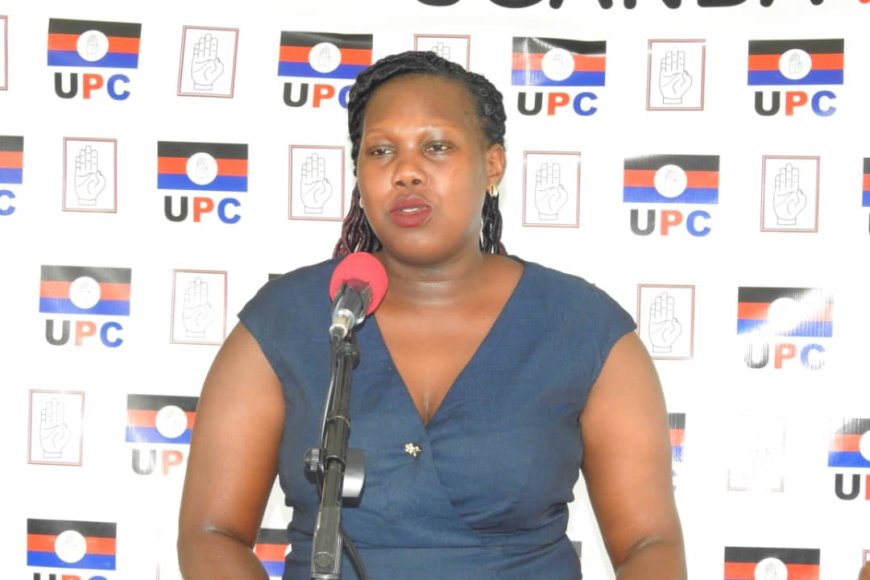
The Uganda People’s Congress (UPC) has criticised the government’s charcoal policy, warning that restrictions on charcoal production and trade could disproportionately affect low-income households that depend on the fuel for cooking.
Speaking to the media at the party headquarters in Kampala, UPC spokesperson Sharon Arach Oyat said charcoal remained a major source of cooking energy for many Ugandans, particularly in rural areas where access to electricity and gas was limited.
Oyat also questioned the government’s performance during the first 100 days following an election, arguing that some policy decisions had increased the economic hardships faced by ordinary citizens.
Her remarks come as Parliament moves to scrutinize the implementation of the government’s charcoal restrictions and the availability of affordable alternatives for households.
Speaker of Parliament Jacob Oboth-Oboth has temporarily suspended enforcement of the charcoal ban, directing the government to present a report on the restrictions and the availability of alternative cooking fuels on October 21.
Oboth-Oboth said enforcing the restrictions would be difficult without ensuring that households dependent on charcoal could access affordable alternatives. He also questioned the reach of the government’s gas cylinder distribution programme.
Kilak South MP Gilbert Olanya also challenged the enforcement approach, arguing that President Yoweri Museveni’s Executive Order No. 3 of 2023 targeted large-scale tree cutting rather than limited cutting for household use.
The directive restricts commercial charcoal production and trade in northern Uganda, West Nile, Karamoja and Teso as part of efforts to curb deforestation.
However, its enforcement has intensified following security operations and the impounding of charcoal consignments, raising concerns about the livelihoods of traders and the welfare of households that rely on the fuel.
Parliament is expected to consider the government’s report on October 21. The report is expected to include statistics on gas cylinder distribution and measures to ensure that alternative cooking fuels are accessible and affordable.
The discussions are likely to focus on balancing environmental protection and efforts to curb deforestation with the need to safeguard household livelihoods and ensure access to affordable cooking energy.
END