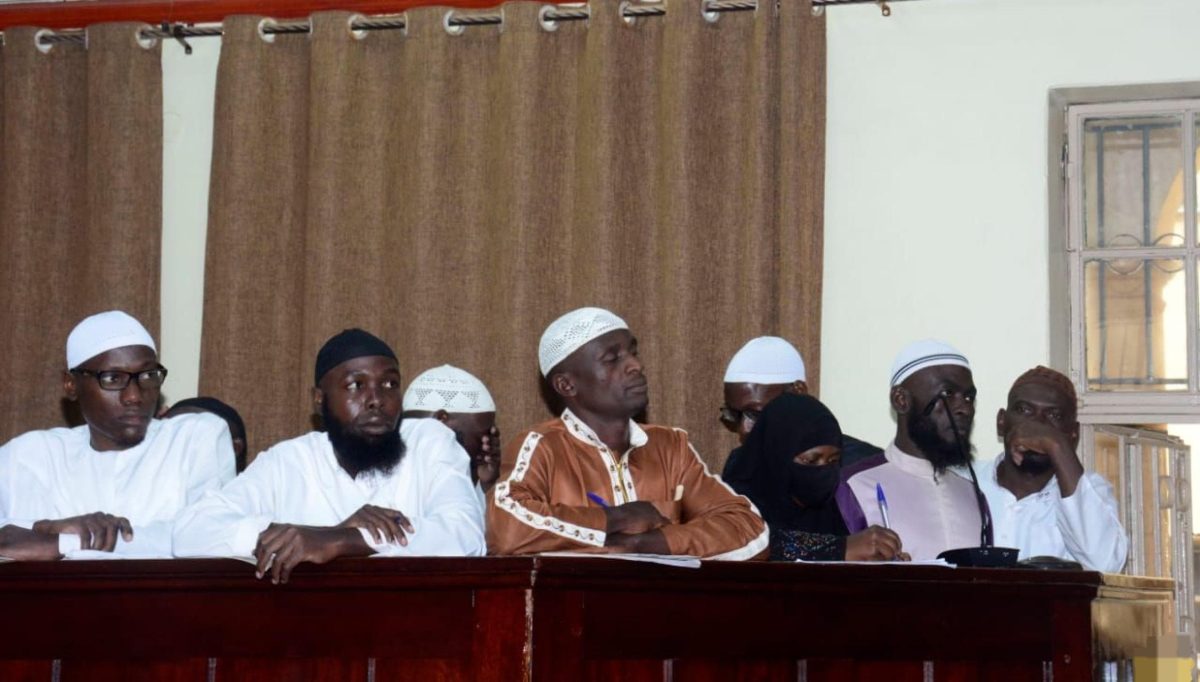
The prosecution has asked the High Court in Kampala to sentence nine people convicted of kidnapping and murdering businesswoman Susan Magara to death, describing the case as one of the “rarest of rare” offences under Uganda’s sentencing guidelines.
The convicts—Yusuf Lubega, Mahad Kisalita, Ismail Bukenya, Abubaker Kyewokya, twin brothers Hassan Wasswa and Hussein Kato Miiro, Abbas Musa Buwembo, Hajjara Nakandi and Muzamir Ssali—were on Monday found guilty of abducting the 28-year-old former Bwendeiro Dairy cashier from Lungujja, near Kabaka Njagala Road, in February 2018.
The court heard that Magara was held captive for three weeks, during which her fingers were cut off, before she was murdered shortly after her family paid a ransom of Shs700 million in an unsuccessful attempt to secure her release. Her body was later discovered dumped along Entebbe Road.
The matter returned to court on Tuesday before trial judge Justice Alex Mackay Ajiji for mitigation and submissions on aggravating factors.
Chief State Attorney Sherifah Nalwanga told court that the kidnapping was carefully planned and executed with the sole intention of extorting money, followed by the deliberate killing of the victim.
Citing Rules 20 and 21 of the Sentencing Guidelines, Nalwanga said the offence carries a punishment ranging from 35 years’ imprisonment to the death penalty. However, she argued that the extreme brutality and circumstances surrounding Magara’s murder justified the maximum sentence.
Together with Chief State Attorney Joseph Kyomuhendo and Senior State Attorney Irene Nakimbugwe, Nalwanga submitted that the crime involved “extreme cruelty” and met the threshold of a “rarest of rare” offence deserving capital punishment.
The prosecution also outlined the alleged roles played by each convict in the planning, execution and aftermath of the crime.
The State told court that Yusuf Lubega was the mastermind behind the operation, taking part in planning meetings, supervising ransom collection, helping dispose of Magara’s body and later investing part of the ransom proceeds.
Hassan Wasswa was accused of participating in the abduction, delivering food to the victim while she was held captive and benefiting from land allegedly purchased using ransom money in Buikwe District.
Muzamir Ssali was accused of transporting gang members to ransom collection points, while Hajjara Nakandi was alleged to have provided the house where Magara was detained and made the final decision to kill her after the group feared they had been exposed. The prosecution further alleged that Nakandi encouraged the crime as a means of raising money to support fellow Muslims.
Other convicts—including Abubaker Kyewokya, Hussein Kato Miiro, Mahad Kisalita, Ismail Bukenya and Abbas Musa Buwembo—were accused of various roles, including guarding the captive, conducting surveillance, facilitating logistics and purchasing property using the ransom proceeds.
The prosecution singled out Buwembo, alleging that he was responsible for cutting off Magara’s fingers, injecting her with ketamine and suffocating her with a polythene bag.
The court is expected to consider the prosecution’s submissions alongside the defense mitigation before determining the appropriate sentences for the convicts.
By Edith Namwanje
4th Aug 2026
End