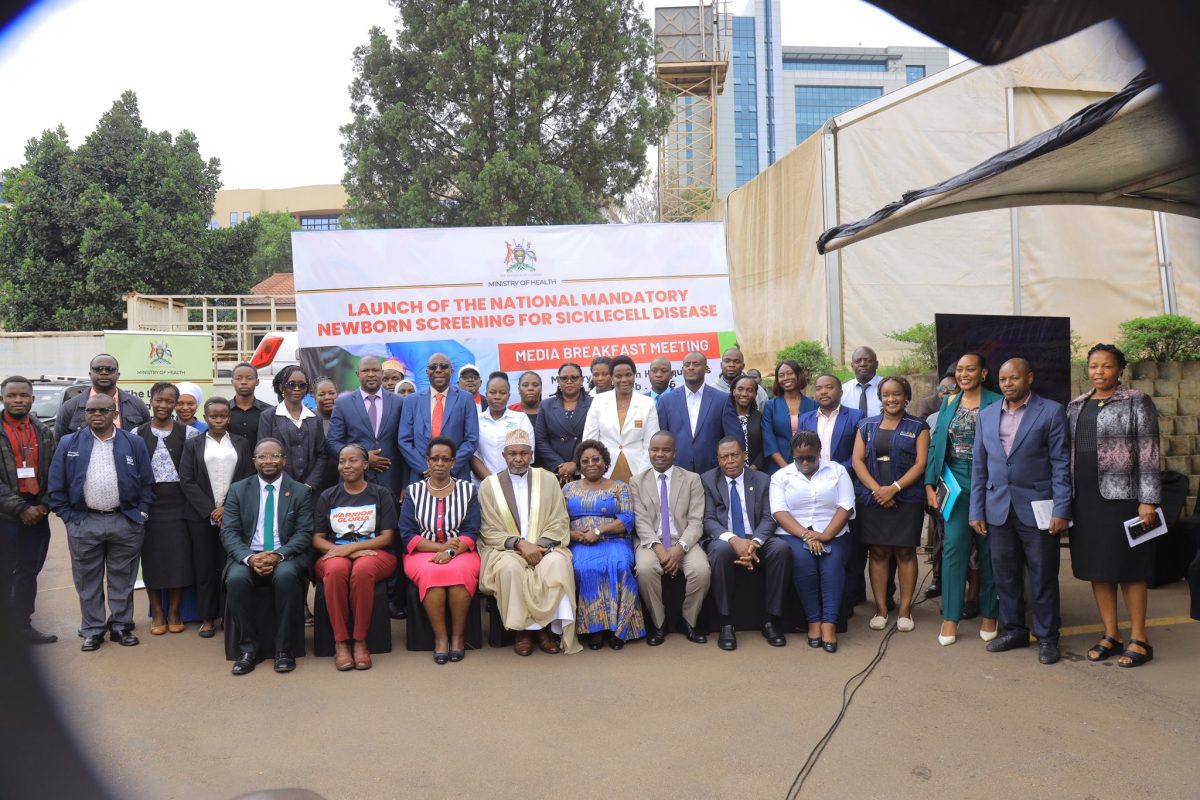
The Ministry of Health has launched mandatory testing of newborn babies for sickle cell disease, a move that doctors have described as courageous, noting that the genetic condition is a major contributor to Uganda’s persistently high child mortality rates.
Child Health Expert Dr. Deo Munube said on Monday, shortly after the nationwide screening was launched, that studies at Mulago National Referral Hospital had found that about 25 percent of babies presenting with fever and malaria actually had undiagnosed sickle cell disease.
He explained that while the government has successfully addressed other major killers of children, such as pneumonia, diarrhea, and malaria, reductions in infant mortality had been limited because interventions for sickle cell disease were not reaching babies early enough.
Munube added that with mandatory screening in place, health workers would be able to provide early treatments, including penicillin and malaria prophylaxis, along with other interventions, before children developed serious complications. He emphasized that the system would also enable health workers to track positive cases, reduce repeated hospital admissions, and improve survival into adulthood.
Dr. Diana Atwine, Permanent Secretary in the Ministry of Health, said that screening would be conducted using Rapid Diagnostic Tests (RDTs) at all government-run health facilities before mothers were discharged after childbirth.
Atwine noted that about 20,000 babies are estimated to be born with sickle cell disease each year, with 80 percent dying before the age of five. She added that these figures were based on testing at a limited number of facilities, and that the true burden might be higher, which is why the Ministry has expanded treatment services to facilities beyond national and regional referral hospitals.
END